



Blog
Small Office Storage Ideas for Shared and Flexible Workspaces

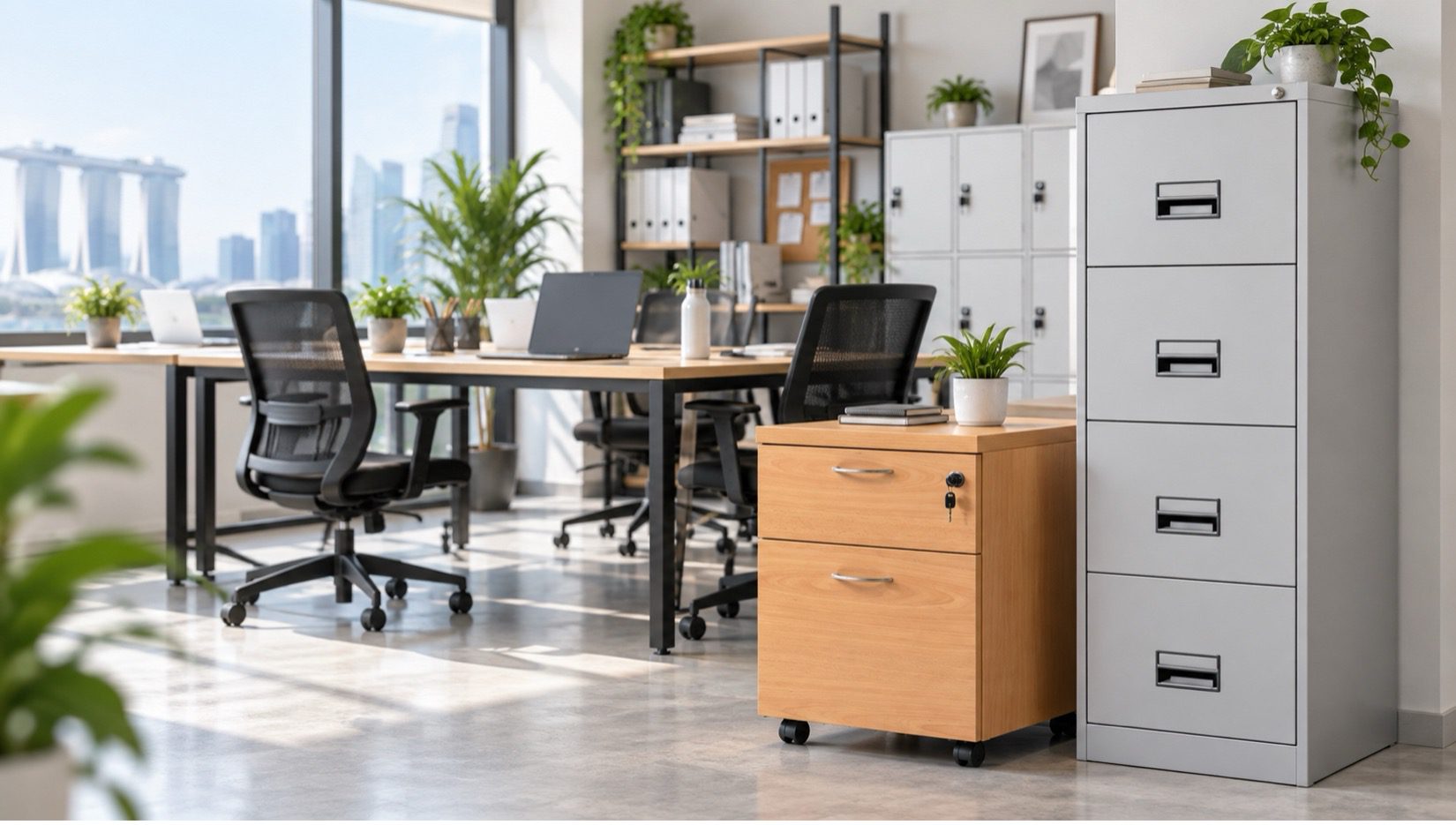
Table of Contents
Office space in Singapore is at a premium, while shared and flexible seating arrangements are becoming increasingly common. Whether your team works in a co-working hub, a hot-desk pool, or a compact SME office, the same problem often comes up. Where does everything go when employees do not have a fixed desk of their own?
That is where practical small office storage ideas can make a difference. The right mix of mobile, lockable, and vertical storage helps employees keep documents, stationery, and personal items organised without needing a permanent workstation. This guide covers practical storage solutions for small, shared, and flexible offices, from under-desk options to shared filing systems, so you can choose a setup that suits how your team actually works.
Why Storage Matters in Small and Shared Offices
Space Constraints in Co-Working and Hot-Desking Setups
Flexible work has changed how office space is used day to day. Singapore remains a strong hybrid market, with 87% of organisations allowing employees to split their time between home and the office. That shift has also supported demand for shared and flexible formats. Singapore’s flex-space market reached 4.2 million sq ft across around 195 centres in H1 2026, equal to 5.5% of total office stock and the highest penetration rate in APAC.
When desks are shared rather than owned, storage has to work differently. An employee who hot-desks on Monday and sits somewhere else on Wednesday still needs a secure place to keep files, chargers, and personal items between visits, without permanently claiming a patch of desk space.
How Clutter Affects Productivity and Professionalism
Clutter is more than a cosmetic issue. In a shared workspace, loose files, stationery, and personal items can quickly take over desks and common areas, making it harder for employees to find what they need and leaving the office looking disorganised. When several people use the same workspace, that clutter also affects the wider team rather than just one employee.
Singapore’s Workplace Safety and Health Council recommends using the 5S approach to create a clean and organised workplace. This includes sorting items, keeping them in order, maintaining cleanliness, standardising good practices, and sustaining them over time. Practical storage makes this easier by giving documents, supplies, and personal belongings a proper place between uses.
Small Office Storage Ideas for Every Workspace
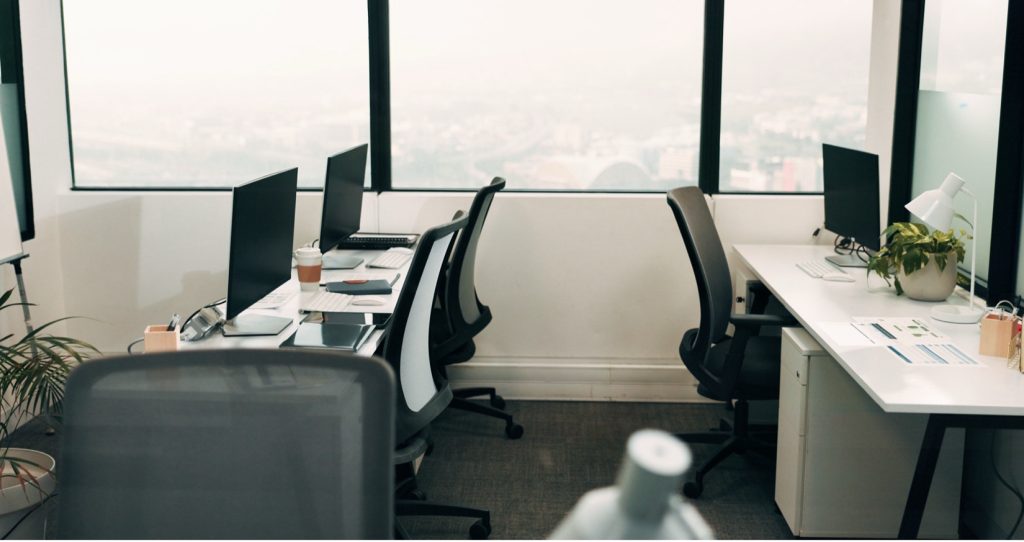
Each idea below tackles a specific space problem, so most small offices end up combining two or three rather than relying on just one.
Under Desk Storage
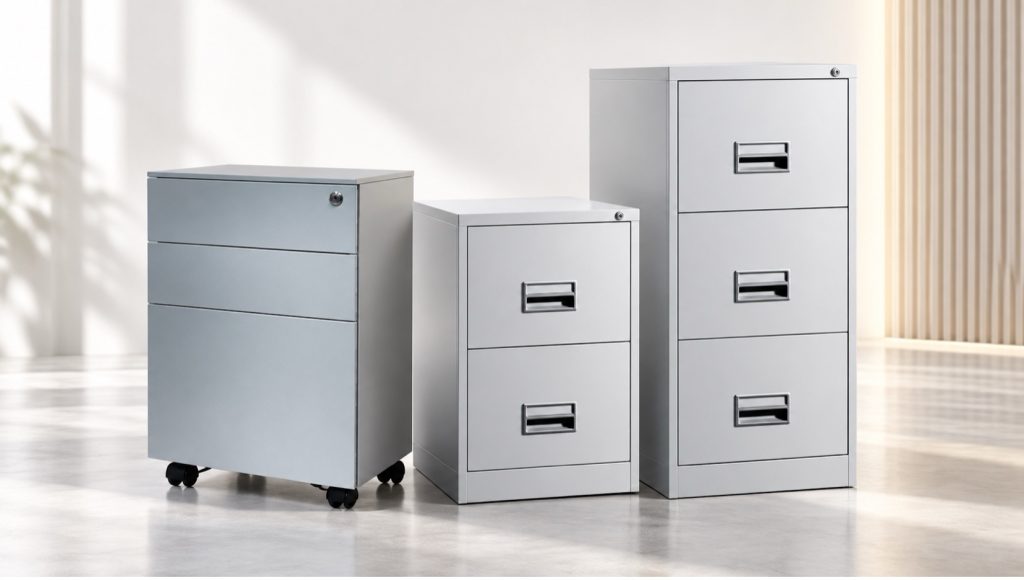
The most space-efficient option for a single desk is a mobile pedestal that rolls in and out from beneath the work surface. A typical unit has two or three lockable drawers, giving you space for stationery, a laptop charger, and active documents without adding to the desk’s footprint.
For hot-desking offices, under desk storage can be especially practical. Because the unit sits on castors, employees can move their pedestal between workstations and keep their belongings together. Avios’s range of mobile pedestals includes metal and wooden finishes with locking options, giving teams secure storage that fits neatly beneath a workstation.
Wall-Mounted and Vertical Storage
When floor space is limited, vertical storage can make better use of the available space. Wall-mounted shelving and vertical racking keep reference materials, binders, and supplies within reach without taking up valuable space around desks. This works particularly well in narrow offices or shared areas where a large floor-standing cabinet could make movement more difficult.
Adjustable shelving can also make better use of vertical space because shelf heights can be changed to suit different items, from files and document boxes to general office supplies. This gives smaller offices more flexibility as their storage needs change.
Compact Filing Cabinets
Not every small office can go paperless, and compact filing cabinets remain a practical way to organise physical documents securely. Vertical cabinets make use of height rather than width, which can work well in offices where floor space is limited. Lockable models also help keep sensitive paperwork away from casual access.
Avios’s filing cabinets range includes both vertical and lateral formats. Offices with a narrow footprint can choose a vertical cabinet, while lateral cabinets provide wider drawers for organising larger volumes of files side by side.
Shared Office Storage Ideas for Co-Working and Flexible Teams
Shared office storage ideas need to solve a different problem because several people may be using the same storage system without getting in each other’s way. The three options below are designed for shared use rather than a single assigned desk.
Personal Lockers for Hot-Desk Employees
A locker gives each hot-desk employee a fixed point of storage even when their desk changes daily. Unlike a shared drawer, a locker is assigned to one person, so bags, spare clothing, and personal items have a secure home that does not depend on which desk was free that morning.
For co-working spaces and shared offices, lockers also make it easier to manage personal belongings between visits. Employees or members can store equipment and other items overnight without leaving them on desks, open shelves, or other shared surfaces.
Mobile Storage Units That Move With Employees
Some teams need storage that travels with the person rather than staying fixed to a desk or wall. A rolling caddy, or a small mobile pedestal that is not parked under a dedicated desk, lets an employee carry stationery, a notebook, and a few active files from meeting room to hot-desk to breakout area, then park the unit wherever they end up working.
This approach suits activity-based offices particularly well, where staff are expected to move between zones set up for focused work, calls, and collaboration over the course of a single day. Keeping storage mobile means employees do not need to return to one fixed point just to retrieve a document.
Shared Stationery and Filing Stations
Not everything needs a personal owner. Printer paper, spare cables, first-aid supplies, and reference binders are usually better kept in a single shared station than duplicated at every desk. A shared filing or supply station, positioned near a printer or pantry, cuts down on the small piles of stationery that tend to collect at individual desks in shared offices.
Labelling shelves clearly and assigning one person to restock the station keeps it from becoming a dumping ground, which is often where shared storage areas fail in practice.
How to Choose the Right Office Storage Solution
Space, Mobility, and Security Considerations
Three factors tend to decide which storage option fits a given office.
Space
Consider how much floor space is available and whether vertical storage would make better use of the room without affecting walkways or work areas.
Mobility
In shared and flexible offices, storage may need to move with employees rather than stay fixed. Castors and lightweight designs can make daily use more practical.
Security
For personal data, employee records, client documents, or signed contracts, lockable storage may be needed. Singapore’s data protection guidelines list locked cabinets as one physical measure organisations can use to protect confidential documents.
Balancing these three factors is what separates workable small office storage ideas from furniture that simply gets in the way.
Matching Storage to Your Workspace Type
A five-person startup using hot-desks needs a different storage mix from a large co-working space or an SME with a mostly fixed team. Smaller hot-desk offices may benefit from mobile pedestals and personal lockers, since employees do not have a permanent desk for storing their belongings.
Co-working spaces may need a broader mix, such as lockers for members, shared filing storage near reception, and vertical shelving in common areas. SMEs with both fixed and flexible seating often sit somewhere in between, using filing cabinets for finance and HR while giving hot-desk staff lighter, mobile options.
Considering these three factors helps you choose small office storage ideas that actually suit the way your office operates.
Conclusion
Storage in a small, shared, or flexible office is not just about tidiness. It affects how quickly people can settle into a desk, how securely they can store documents when away from their workstation, and how professional the space looks to clients walking through. The right small office storage ideas usually combine two or three approaches, such as under-desk pedestals for daily items, lockers or shared stations for what does not fit at a desk, and vertical storage for anything that would otherwise sit on the floor.
Start by mapping how your team actually moves through the office, then match the storage to that pattern rather than the other way round. A workspace where everyone knows where their things belong tends to function better than one where storage was an afterthought.
Frequently Asked Questions
What are the best small office storage ideas?
Mobile pedestals, lockers, vertical shelving, and compact filing cabinets work well in small offices.
What storage works best for hot-desking?
Personal lockers and mobile pedestals are practical because employees can store belongings without having a fixed desk.
How can I save space in a small office?
Use vertical storage, under-desk units, and compact cabinets to reduce clutter without taking up too much floor space.
Should office storage be lockable?
Yes, especially for personal belongings, confidential documents, or files containing sensitive information.
Are filing cabinets still useful?
Yes. They are still useful for organising and securing physical documents such as HR, finance, and contract files.
