



Blog
How to Maximise Office Storage Without Using More Floor Space

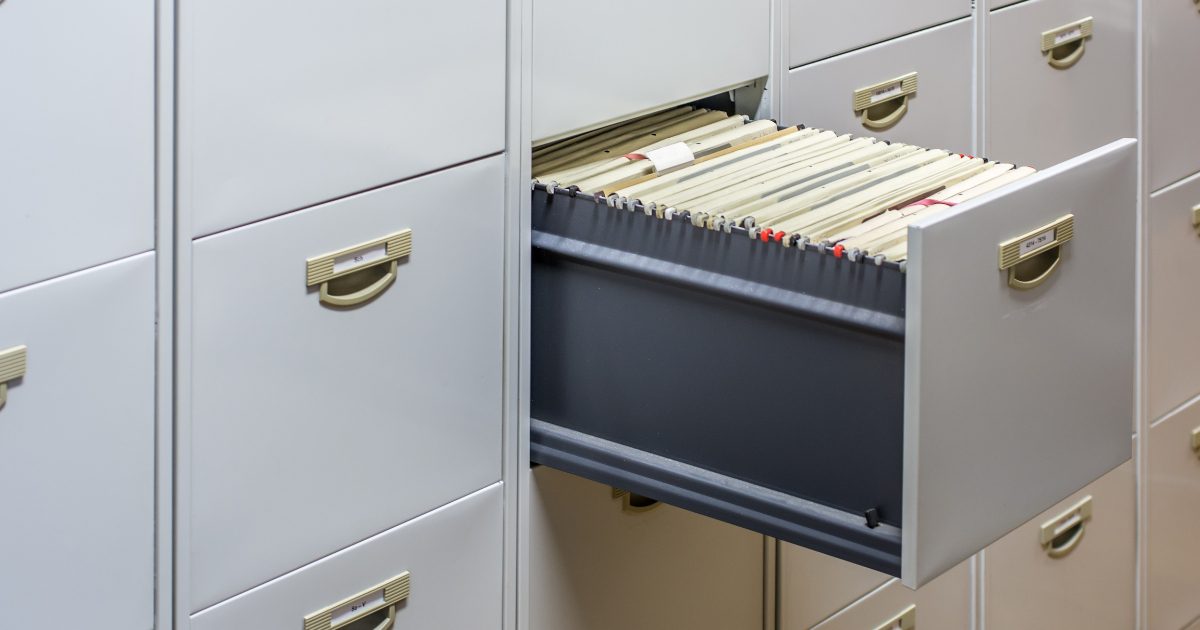
Table of Contents
Even as offices become more digital, many businesses still need office storage for files, contracts, forms and other physical records.
When floor space is limited, a full-height metal cabinet can provide more storage without taking up additional room. A half-height cabinet may be better for frequently used items or office equipment.
This guide explains how to maximise office storage without using more floor space and choose the right cabinet for your office.
Full-Height vs Half-Height at a Glance
| Consideration | Full-height metal cabinet | Half-height metal cabinet |
| Storage capacity | Higher capacity, with several shelves | Lower capacity, but suitable for everyday items |
| Best for | Files, records, stationery and shared supplies | Frequently used items and small equipment |
| Access | Some items may be stored above eye level | Contents are generally easier to reach |
| Top surface | Usually not intended as a work surface | May hold a printer or office equipment, if suitable |
| Space required | Makes better use of vertical wall space | Works well beneath windows or in smaller rooms |
| Common locations | Records rooms, offices and shared storage areas | Reception areas, workrooms and staff offices |
The choice isn’t simply about which cabinet is taller. It depends on how much storage you need, how often the contents are used, and whether the top surface could serve another purpose.
When Should You Choose a Full-Height Metal Cabinet?
You Need a Dedicated Storage Area
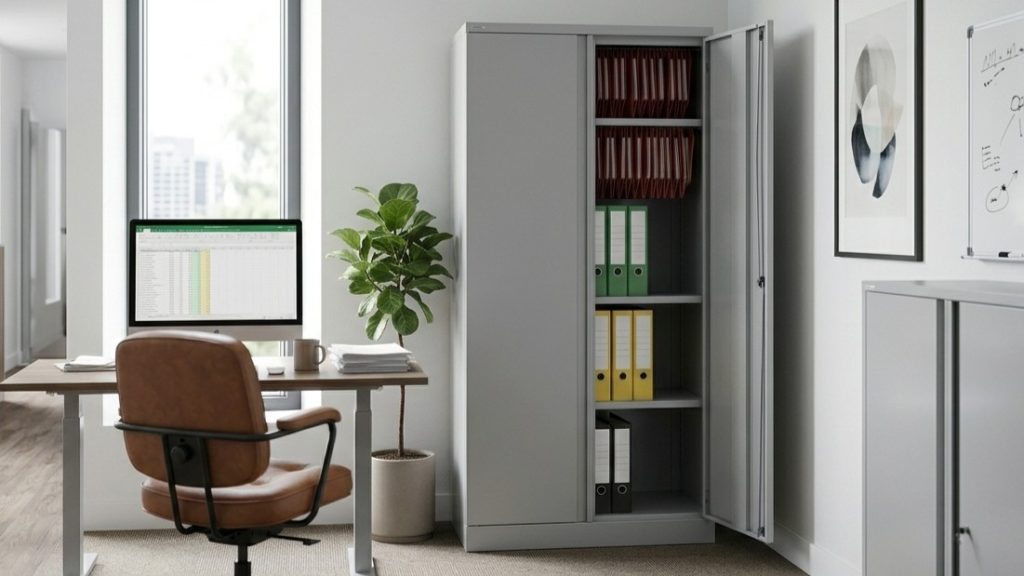
A full-height metal cabinet is a practical choice when your office has one main office storage area for files and supplies. It can be placed along a wall in a records room, administration area or shared workspace. By making use of the room’s vertical space, this leaves more space for desks, chairs and clear walkways.
You Store Shared, Bulky or Long-Term Records
Tall cabinets are well suited to items that need to stay in the office but aren’t accessed constantly, including:
- Archived project files
- Contracts and invoices
- Human resources records
- Bulk stationery and office supplies
- Boxes, folders or equipment that are not used regularly
For businesses in Singapore, record retention is another consideration. IRAS requires companies to retain financial records and supporting documents for at least 5 years from the relevant Year of Assessment. A full-height cabinet with sufficient shelf space makes it easier to keep records organised and accessible for audits or tax filing.
Your Office Has Limited Wall Space
If a wall is narrow, a full-height cabinet may provide more storage than several smaller units placed side by side. This is one of the main reasons businesses choose vertical, space-saving office storage.
The full-height cabinet can hold a large volume of files without extending far into the room, and enclosed doors keep paperwork out of sight, helping a compact workspace look less crowded.
When Is a Half-Height Metal Cabinet the Better Choice?
You Need Quick Access to Frequently Used Items
When comparing a full-height vs half-height storage cabinet, consider how often staff need to access the items. A half-height cabinet is often more convenient when staff need to retrieve items throughout the day. Its lower height keeps frequently used supplies within easy reach and makes it easier to check stock at a glance.
Singapore’s Workplace Safety and Health Council also advises arranging storage to reduce unnecessary reaching, twisting and overstretching, making accessible storage a practical consideration for frequently used items.
You Need a Usable Surface for a Printer or Office Equipment
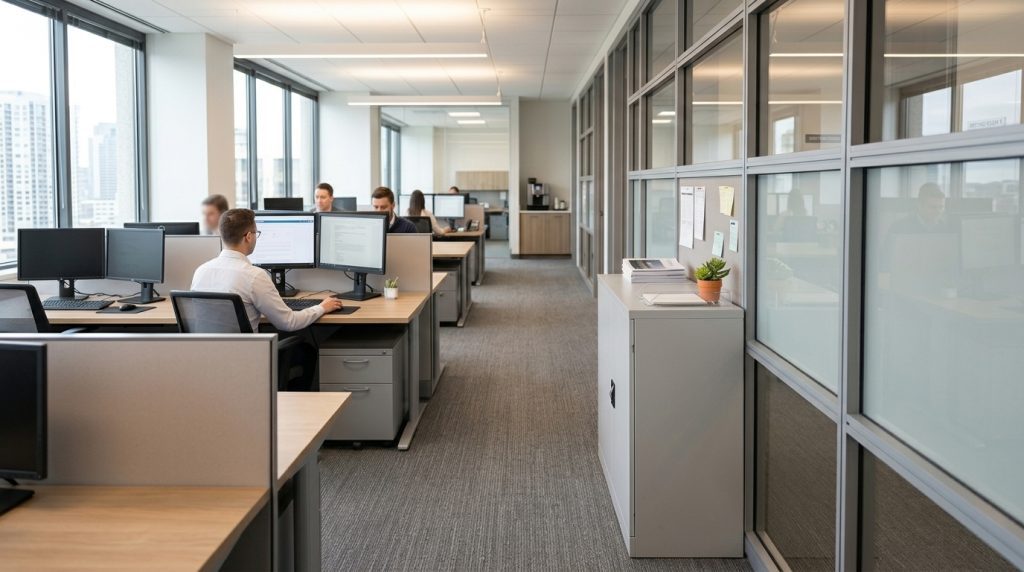
The top of a half-height cabinet can provide useful additional space for equipment such as a printer, scanner or label printer. This can free up desk space while keeping printing equipment and supplies together, with other materials can be stored inside the cabinet.
However, you need to check the manufacturer’s instructions before placing equipment on top. The half-height cabinet must be designed to support additional weight and you should allow enough spaces.
You Are Furnishing a Smaller Room or Reception Area
A half-height cabinet fitting below a window or beneath a wall display makes it feel less bulky than a full-height model. This makes it a suitable choice for the smaller offices, meeting rooms and reception areas commonly found in Singapore.
Check Safety, Security and Durability Features
Locking Options for Confidential Items
If the cabinet will store employee files, client information, contracts or financial documents, choose a model with a suitable locking system.
A full-height cabinet may be more practical when you need to keep a larger volume of confidential records in one place. A half-height cabinet may be enough for smaller quantities of sensitive documents that staff access regularly.
Consider who needs access and where the cabinet will be placed. If it is located in a shared office or public area, a lock provides an additional layer of protection for physical records. This also supports the need for businesses to take reasonable steps to protect personal data under Singapore’s PDPA.
Powder Coating and Rust Resistance
Both full-height and half-height cabinets should be able to withstand daily use. In Singapore’s humid environment, a durable finish can also help protect the metal from corrosion.
Powder coating provides a smooth, hard-wearing surface that is easy to clean. When comparing models, check the quality of the doors, hinges, shelves and locking mechanism as well. These parts affect how well the cabinet performs over time.
A well-constructed metal cabinet should provide reliable office storage for files, stationery and office equipment without requiring frequent replacement.
Measure Your Office Before Buying
Cabinet Height, Width and Depth
Measure the proposed location before looking at cabinet dimensions. Note the available height, width and depth, then compare these measurements with the product specifications.
Don’t forget the features that are easy to miss, including:
- Skirting boards
- Nearby desks
- Power sockets
- Light switches
- Air-conditioning units
- Door and drawer movement
External dimensions tell you whether the cabinet will fit the room while internal dimensions tell you whether it will hold what you need. Check the internal width and depth if you plan to store suspension files, lever-arch folders, boxes or equipment. Avoid pushing a cabinet so tightly against other furniture that its doors can’t open fully.
Door Clearance and Walkway Space
Measure the area in front of the cabinet as well as the cabinet itself. Someone needs enough room to stand safely while opening the doors and taking out an item.
Check that open doors will not block:
- A main walkway
- An office entrance
- An emergency exit
- An electrical panel
- A frequently used workstation
If space in front of the cabinet is tight, a cabinet with sliding doors may be worth considering.
Ceiling Height
A tall cabinet may fit against the wall but still be difficult to install. Measure the route from the delivery entrance to the proposed location.
Consider the dimensions of:
- The main entrance
- Internal doorways
- Corridors
- Lifts
- Staircases
- Ceiling fittings
This matters especially for full-height cabinets. The unit may need to be tilted or turned during installation, so the available clearance must be enough space. You should also consider how the cabinet will be moved if the office is rearranged later. A unit that is difficult to bring into the building may be equally difficult to remove.
Conclusion
With the right cabinet, you can improve how to maximise office storage without using more floor space while keeping files and supplies organised. Check the locking system, shelf strength, finish, stability and available clearance. Accurate measurements will help you choose space-saving office storage that fits properly and remains practical to use.
Frequently Asked Questions
How can I maximise office storage space?
Clear out what you don’t need, then use vertical space with tall cabinets. Keep daily items close and store archives up full-height cabinets.
How can a cluttered office space be organised?
Organise your belongings into groups or discard anything you don’t need, and create designated areas for meetings, work, and storage. To make things easy to put back, use matching containers and labels. To prevent clutter from returning, manage cables and maintain a basic filing system.
What are some good options for office storage?
For everyday office storage, half-height cabinets and mobile pedestals are best for daily documents, stationery, and personal items close to your desk. Full-height cabinets suit large volumes of files, archives, and bulk supplies and choose lockable models if you store confidential records.
Which should I choose between a full-height or half-height metal cabinet for my office?
Pick full-height cabinet when you need maximum storage in a small footprint, such as for files, boxes, and bulk supplies. Choose half-height cabinet when you want a lower unit that can double as a counter surface, fit under windows, or keep sightlines open in rooms.
