



Blog
Mobile Pedestal vs Filing Cabinet: Which Suits Each Role?

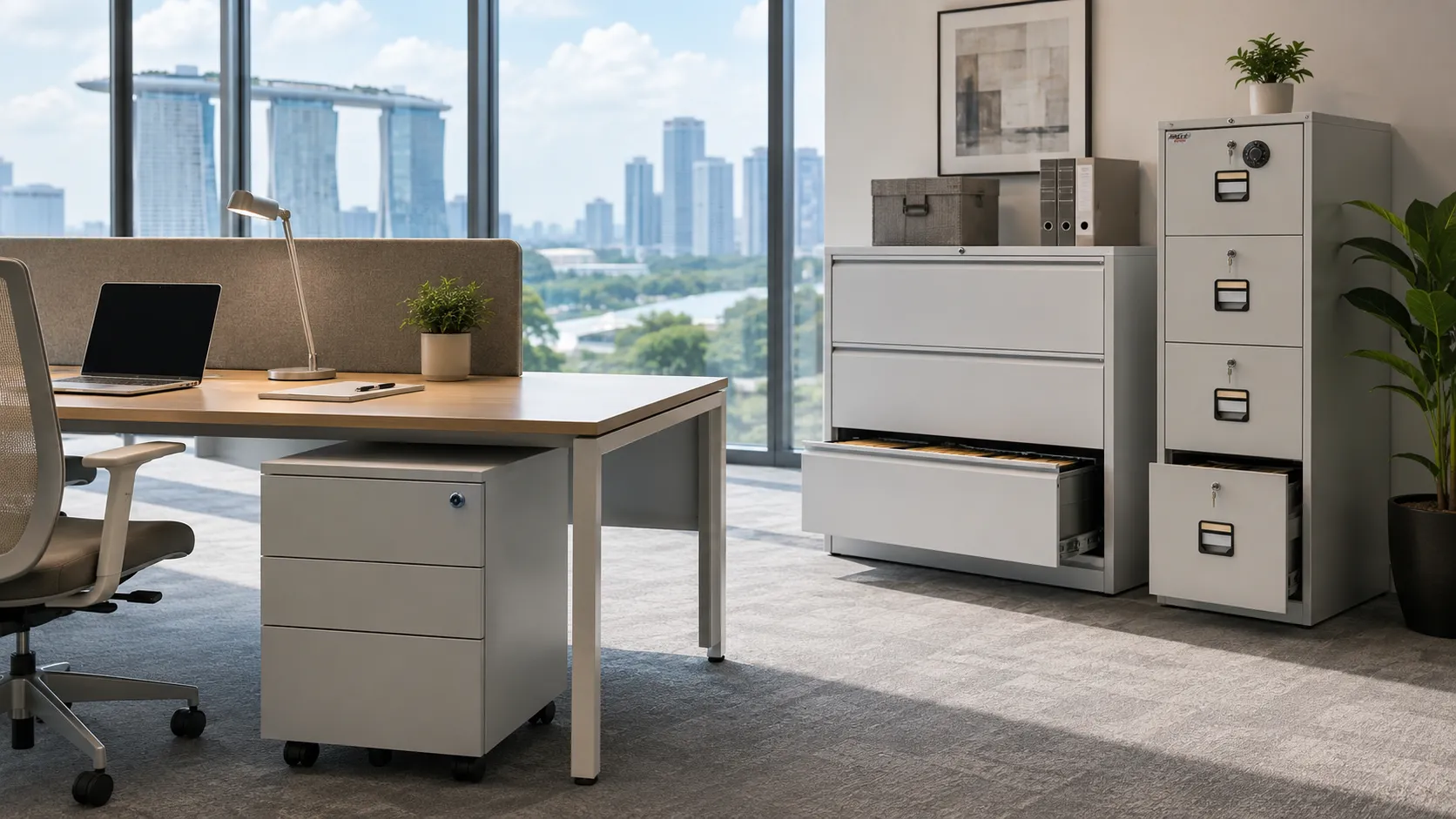
Table of Contents
Choosing between a mobile pedestal vs filing cabinet starts with understanding the best office storage for employees based on how they use and access documents. Give a mobile pedestal to any employee who just needs quick, personal access to a handful of active files. Reach for a filing cabinet when documents are shared across a team, stored in bulk, or need to be kept for years. In many offices, the most practical answer is to use both.
This isn’t really about which product wins overall. It’s about matching the storage to the person, the space, and the paperwork. An HR executive filing confidential letters has different needs than a finance team archiving years of invoices. Get it wrong, and you either waste floor space on cabinets nobody opens, or your team ends up digging through one shared drawer for the same folder.
It matters more than it seems, too. Poorly matched storage tends to spill onto desks and walkways, and clutter has a real effect on how people work. One workplace clutter study found disorganised storage slows employees down and adds to daily stress.
Mobile Pedestal vs Filing Cabinet at a Glance
Before you assign either option to your team, it helps to see how they stack up side by side.
| Factor | Mobile Pedestal | Filing Cabinet |
| Space and placement | Fits beneath or beside a desk without requiring a separate storage area | Freestanding; needs its own wall or floor allocation |
| Storage capacity | 2–3 drawers, built for one person’s active files | Multiple deep drawers or shelves for high-volume, shared records |
| Mobility | Castors let it move with hot-desking or desk reshuffles | Fixed in place once positioned |
| Security | Central locking system secures the drawers; selected models offer key or combination locks | Central locking system secures all drawers; anti-tilt protection is available on standard models, while separate fireproof models protect sensitive documents |
| Cost | Price varies by drawer configuration, material and locking features | Price varies by vertical, lateral, or fireproof design and the required storage capacity |
The main difference is how each storage type supports your daily workflow. A practical employee office storage plan should give individuals quick access to everyday items while keeping shared records organised centrally. A mobile pedestal keeps personal and frequently used items close to one employee, while a filing cabinet provides more space for shared, confidential or long-term records.
When Should Each Employee Get a Mobile Pedestal?
Personal Storage Is Needed
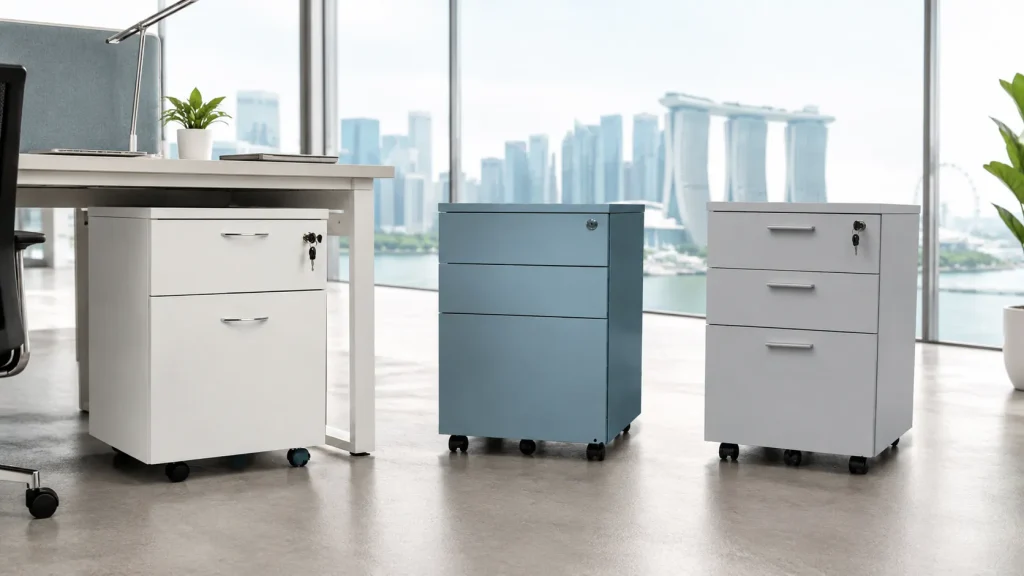
A mobile pedestal gives an employee a dedicated place for stationery, personal belongings and frequently used documents. This is especially useful in an open-plan office, where shared drawers can quickly become disorganised.
Employees Need Frequent Access
You should consider a mobile pedestal when an employee regularly uses the same folders or documents throughout the day. For example, a project manager handling active files can keep them within easy reach instead of repeatedly walking to a central filing cabinet.
Workstations Change Regularly
Mobile pedestals are practical when employees hot-desk, rotate seats or move between workstations. Their castors make them easier to reposition, giving employees a consistent place for their belongings even when seating arrangements change.
When Is a Filing Cabinet the Better Choice?
Documents Are Shared Across Teams
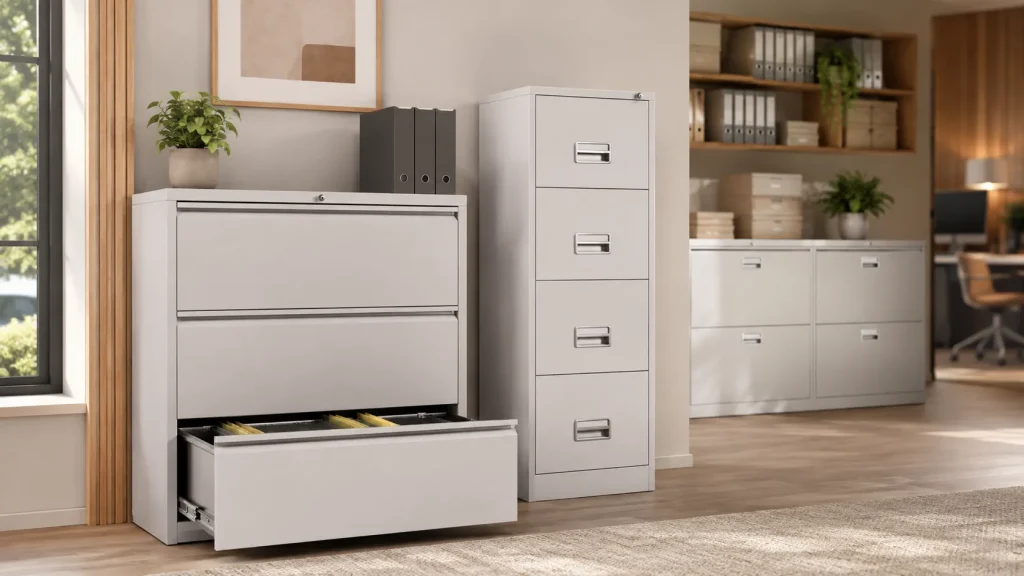
A filing cabinet is the better choice when contracts, client files, or other business documents need to be accessed by several authorised employees. By keeping these records in one central location, you make it easier for your team to find what they need without relying on one person being at their desk.
For confidential documents such as HR records, you should use a lockable cabinet and limit access to the employees responsible for managing them.
Large Volumes of Files Are Stored
Once your department is managing dozens of folders, a mobile pedestal may no longer provide enough room. A filing cabinet gives you several full-size drawers, while a lateral cabinet can provide wider storage for departmental records.
Records Need Long-Term Organisation
IRAS requires your company to retain financial records and supporting documents for at least five years from the relevant Year of Assessment. When you need to keep records for that long, a clearly labelled filing cabinet helps you organise them and retrieve the right documents for tax filing, audits or internal reviews. A standard lockable cabinet may be suitable for general records. For valuable or difficult-to-replace documents, you may consider a purpose-built fire-rated filing cabinet for additional protection.
How to Create a Hybrid Employee Office Storage Solution Setup
Assign Clear Storage Ownership
Give employees control over their personal drawers, while setting clear labels, filing rules and access permissions for shared cabinets. This makes it easier to track documents and prevents shared storage from becoming disorganised.
Keep Files Close to Where They Are Used
Store active documents near the employees or teams that use them most. Less frequently accessed records can be moved to a central cabinet or archive area, freeing up valuable workspace.
Review What Still Needs Physical Storage
As your digital filing system develops, review which records must remain in hard copy, which can be scanned and which can be securely disposed of. This prevents your office from holding more physical storage than it needs.
How to Choose the Right Office Storage Solution
The best office storage for employees should be easy to access without encouraging unnecessary reaching, twisting or overstretching. Singapore’s Workplace Safety and Health Council advises arranging workstations to reduce unnecessary reaching, twisting and overstretching. Frequently used files should therefore remain within comfortable reach, while heavier items should be stored at a practical height.
With these requirements in mind, you can compare Avios mobile pedestals and filing cabinets by size, configuration and locking options to find a solution that supports your office layout, workflow and budget.
Conclusion
The right storage plan should make documents easier to access without taking up more space than necessary. By assigning personal, shared and archived storage clearly, you can keep your workplace organised while giving your team practical access to the records they use.
FAQs
Are mobile pedestals secure enough for confidential documents?
A lockable mobile pedestal may be suitable for routine confidential files that need to stay close to your workstation. For highly sensitive, valuable or difficult-to-replace records, you should consider a secure filing cabinet with the appropriate locking or fire-rated features.
How many filing cabinets does your office need?
You should base the number of cabinets on document volume, filing practices and retention needs rather than headcount alone. A small finance team that handles large amounts of paperwork may need more cabinet space than a larger department that stores most records digitally.
How long should your business keep records in Singapore?
IRAS generally requires you to retain relevant accounting records and supporting documents for at least five years from the relevant Year of Assessment. These records may be stored physically or electronically, so you should only plan cabinet space for documents that must remain in hard copy or that your business chooses to keep on paper.
