



Blog
How to Choose the Right Filing Cabinet for Your Office: A Practical Buyer’s Guide

Even with more offices going digital, filing cabinets are still far from outdated. Many businesses in Singapore still rely on physical storage for important documents, contracts, daily paperwork, and records that must be retained under Singapore’s business record-keeping requirements.
But choosing the right filing cabinet is not just about picking the cheapest one. The right cabinet should fit your documents, office space, security needs, and future storage requirements. This guide will help you choose a metal filing cabinet that supports your workflow today and stays useful as your office needs grow.
Matching Cabinet Types to Your Office Requirements
Document Size Compatibility: Letter, Legal, and A4
Start by checking the document sizes your office uses most often. In Singapore, many workplaces file A4 documents, while some sectors may also handle longer formats such as legal-size papers, contracts, patient records, or project documents.
Instead of choosing based on drawer count alone, check the cabinet depth, file holder system, and whether the drawers can support different filing pocket arrangements. Avios filing cabinets, for example, include file holders that allow filing pockets to be arranged front-to-back or left-to-right. If your office handles mixed document sizes, confirm the exact compatibility before buying so the cabinet stays useful as your filing needs change.
Vertical vs Lateral: Which Format Suits Your Space
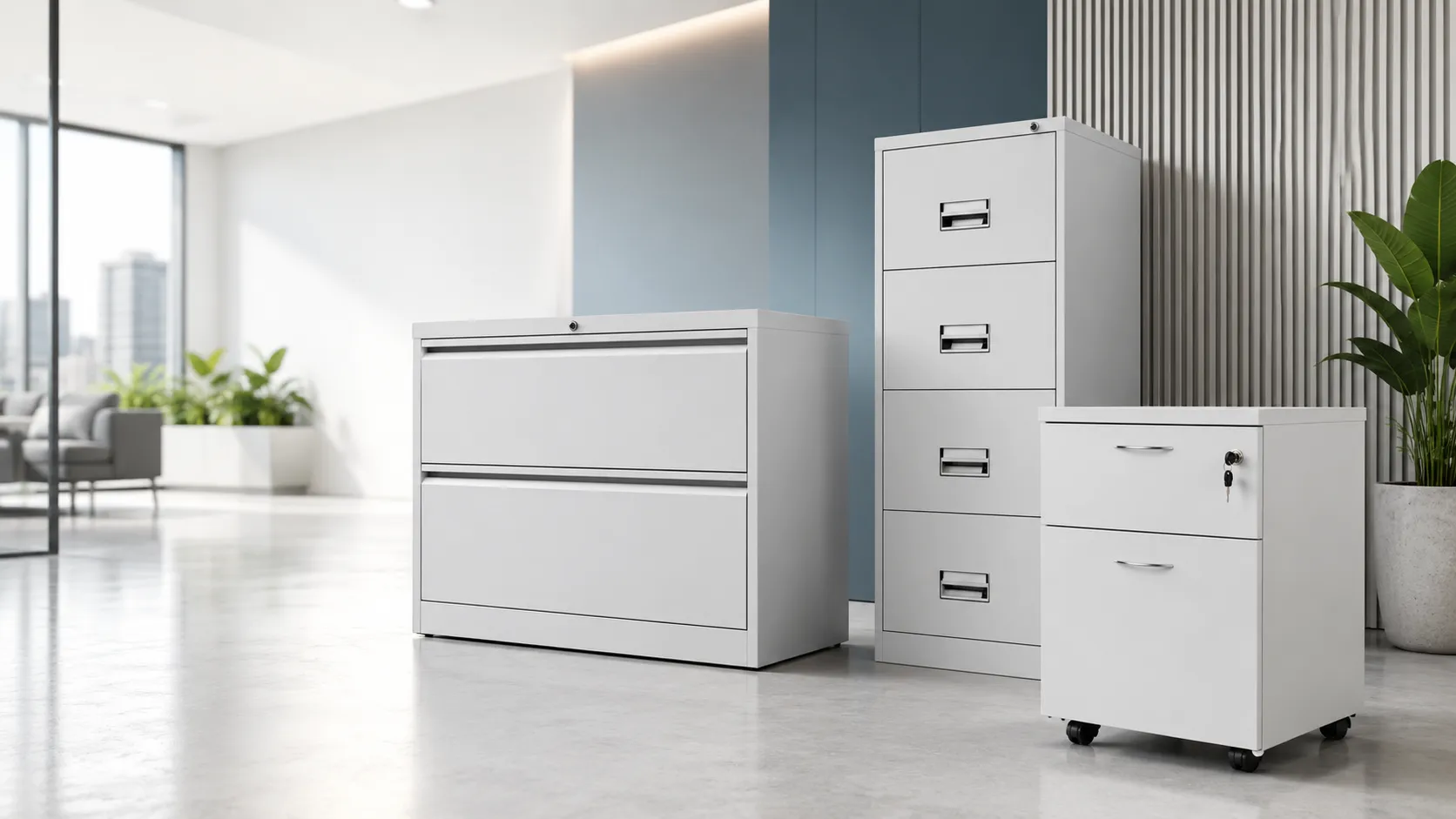
A vertical filing cabinet is slimmer and deeper, so it is a good choice when you want to save floor space. Avios’ verticalfiling cabinets come in 2, 3, and 4 drawer options, with a 465mm width and 620mm depth.
A lateral filing cabinet is wider and shallower, which can make files easier to see and retrieve, especially in shared office areas. Avios’ lateral filing cabinets also come in 2, 3, and 4 drawer options, with a 900mm width and 450mm depth.
If your office stores important documents that need extra protection, you can also consider a fireproof filing cabinet. Avios’ fireproof filing cabinet combines file storage with a concealed safe and is tested for 1 hour in ambient temperatures reaching 925°C. It also comes with a combination lock for the safe and keys for the filing drawers.
For everyday filing, lateral cabinets may feel more convenient. For documents you do not access often, vertical cabinets can be a practical space-saving option.
Mobile and Modular Options for Dynamic Offices
Mobile pedestals are useful for offices that need flexible, under-desk storage. Instead of taking up a fixed wall space like a full filing cabinet, they can sit beside or beneath a workstation and move when the layout changes.
Avios offers several mobile pedestal options, including 2-drawer, metal, wooden, and keyless models. Depending on the model, these come with filing drawers, stationery drawers, castors, locks, and even combination lock options. Some Avios models also support A4 and foolscap filing, making them practical for personal documents, office supplies, and frequently used files.
Space Optimisation and Storage Capacity Planning
· Floor Space vs Storage Volume: Vertical cabinets are better when you have limited floor space because they use height instead of width. Lateral cabinets take up more horizontal space, but they can make files easier to browse and retrieve in shared office areas.
· Under-Desk Storage: Mobile pedestals or compact filing units are useful for keeping everyday documents close to your workstation. They fit under or beside desks and can be moved when the office layout changes.
· Drawer Configuration: Choose the number of drawers based on how much you need to store. For better organisation, separate active files, archived documents, HR records, finance papers, or project files into different drawers.
· Adjustable Internal Systems: Adjustable file rails and dividers help cabinets support different filing methods and document types.
Security, Safety, and Material Durability Standards
A good filing cabinet should protect documents, stay stable when loaded, and hold up to daily office use. Before choosing one, check the locking system, drawer mechanism, safety features, and surface finish.
For security, a central locking system is useful because it lets users secure all drawers at once. This is practical for offices storing contracts, invoices, HR records, or other sensitive paperwork.
For safety, look for an anti-tilt mechanism. This helps prevent more than one drawer from opening at the same time, reducing the risk of the cabinet tipping forward when it is full.
Drawer strength is also important. As a reference, Avios vertical filing cabinet drawers are tested with a 30kg load, while its lateral filing cabinet drawers are tested with a 45kg load, both to 50,000 cycles.
For durability, features such as ball bearing slides, rust-resistant metal treatment, and epoxy powder coating can help the cabinet perform better in everyday office use.
Making the Final Purchase Decision
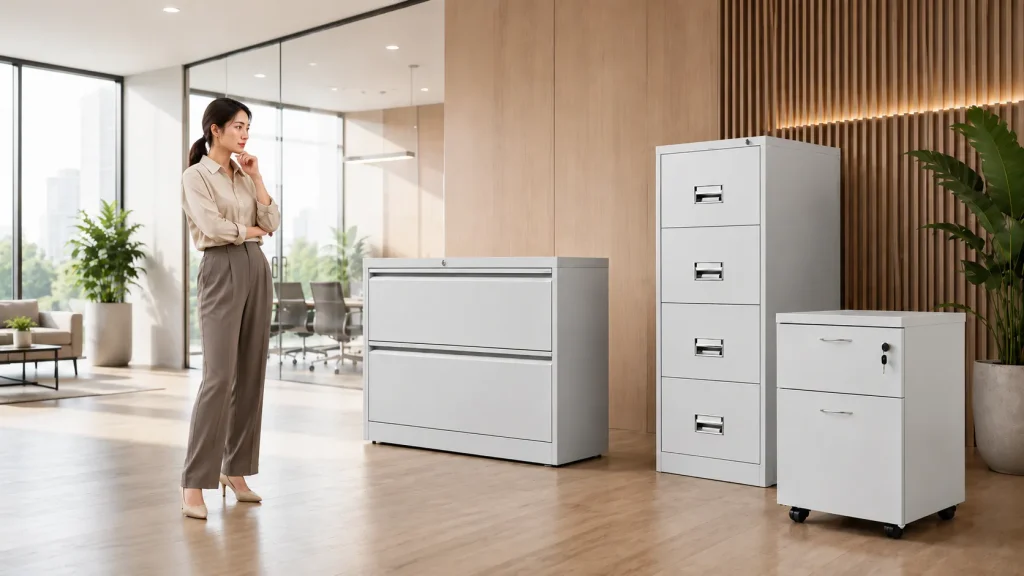
Before buying a filing cabinet, take a step back and look at how your office actually uses documents. The right choice should fit your space, daily workflow, security needs, and budget.
Start with a simple checklist:
- Available space: Choose vertical cabinets for narrow areas and lateral cabinets for shared access areas.
- Document type: Check whether you need storage for A4, foolscap, legal-size files, or mixed formats.
- Storage volume: Estimate how many files you need to store now and allow room for future growth.
- Security needs: Look for central locking if you store contracts, invoices, HR records, or confidential documents.
- Safety features: Anti-tilt mechanisms and strong drawer slides are useful for heavily used cabinets.
- Mobility: Use mobile pedestals if you need under-desk storage or flexible workstation layouts.
- Delivery and installation: Confirm dimensions, access routes, lift availability, and placement before ordering.
- Maintenance: Keep cabinets dry, avoid overloading drawers, and clean surfaces regularly.
A filing cabinet is a long-term office item, so the cheapest option is not always the best choice. Pick one that supports how your team works every day.
Conclusion
Choosing a filing cabinet is really about finding what works best for your office. Think about how much space you have, how many files you need to store, how often your team needs access, and whether the documents need extra security.
If your office is tight on space, a vertical cabinet may be the better fit. If files are shared often, a lateral cabinet can make browsing and retrieval easier. For personal or under-desk storage, a mobile pedestal may be more practical.
The right filing cabinet should help your team stay organised, protect important documents, and support everyday work without taking up unnecessary space.
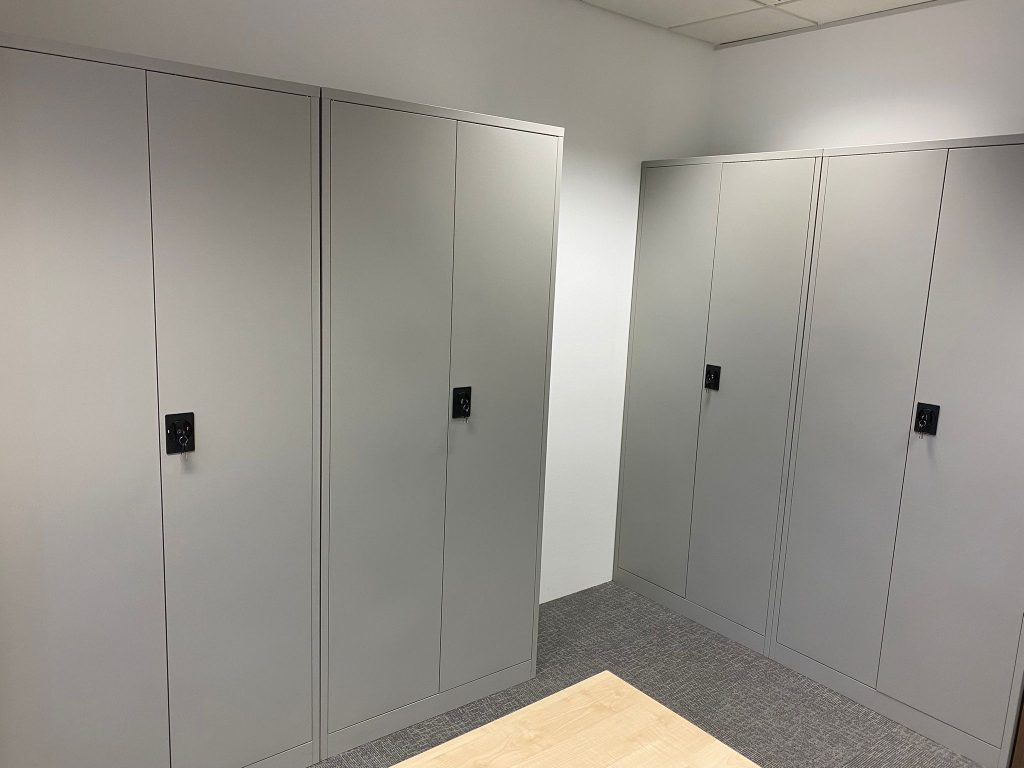
For offices in Singapore, Avios offers filing cabinets, mobile pedestals, lockers, and metal storage cabinets that can suit different workspace needs.
FAQs
How do I choose the right filing cabinet for my office?
Check your space, document type, storage volume, and security needs. Vertical cabinets suit narrow areas, while lateral cabinets work better for shared file access.
Are filing cabinets still necessary in modern offices?
Yes. Many offices still keep physical contracts, invoices, HR records, and compliance documents that need secure, organised storage.
What are the main types of filing cabinets?
The common options are vertical filing cabinets, lateral filing cabinets, and mobile pedestals. Each suits different space and access needs.
What is the difference between a filing cabinet and a mobile pedestal?
A filing cabinet stores larger document volumes. A mobile pedestal is smaller, movable, and better for personal desk storage or daily-use files.
What is the difference between vertical and lateral filing cabinets?
Vertical cabinets are slimmer and deeper. Lateral cabinets are wider and shallower, making files easier to browse in shared office areas.
