



Blog
How Many Storage Units Does an Office Need?

Table of Contents
Walk into most Singapore offices and you’ll spot the same pattern. Neat rows of desks, a meeting room or two, and tucked somewhere along the wall, a bank of metal filing cabinets or a storage cupboard. The furniture is familiar. What’s less obvious is how anyone decided how many units to buy in the first place.
How many storage units does an office need? The answer depends on your headcount, how much paper you actually keep, the size of your cabinets, and how much floor space you can spare. This guide breaks that down into a method you can actually follow.
What Determines How Many Storage Units an Office Needs?
Number of Employees
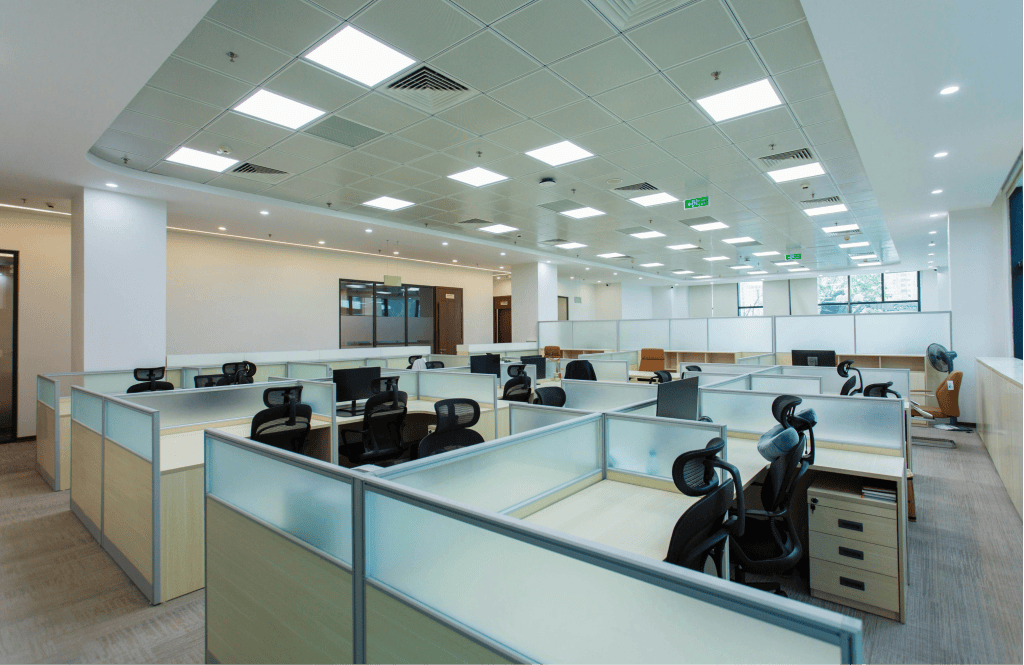
In Singapore, most offices plan for about 80-150 sq ft per employee in total, covering workstations, meeting rooms, pantry, and circulation. Storage doesn’t usually get its own per person figure, but it does scale with headcount. More staff generally means more HR files, project records, invoices, and admin paperwork.
A practical starting point is one small personal storage module per employee, such as a locker or under desk cabinet, with team files consolidated into shared metal cabinets for office use or a dedicated filing room. This avoids the common mistake of scattering small cabinets everywhere and eating into floor areas you’d rather use for something else.
What You Need to Store
Before buying anything, list what needs to live in your cabinets.
- Client or project files
- HR and payroll records
- Finance documents such as invoices and receipts
- Office supplies such as stationery, forms, and binders
- Equipment and spares such as IT accessories, tools, and manuals
Some Singapore workplace design guides point out that large, scattered storage areas are inefficient, and encourage organisations to consider offsite storage, compactors, or digital archiving before simply adding more cabinets.
Cabinet Size and Office Cabinet Capacity
Metal filing cabinets in Singapore tend to come in fairly standard sizes:
| Cabinet Type | Approx. Dimensions (mm) |
| 2 drawer vertical | 720 x 475 x 600 |
| 3 drawer vertical | 1020 x 475 x 600 |
| 4 drawer vertical | 1320 x 475 x 600 |
| Lateral 2 to 4 drawer | 720 to 1320 x 900 x 450 mm |
Office cabinet capacity also depends on how thick your folders are, but a typical 4 drawer vertical unit holds roughly 1,200 to 1,600 A4 or F4 folders, or tens of thousands of sheets. That’s why it pays to estimate your total file volume before deciding how many units to buy.
Office Size and Available Floor Space
Singapore offices generally work with limited floor space, so every square foot counts. A commonly used facilities-planning estimate is about 7 sq ft per cabinet, covering the unit plus room to open the drawers. In tight layouts, shallower lateral cabinets around 450 mm deep, or tall wall high units, tend to make better use of the space than deep vertical stacks.
Frequency of Access
Not all files are created equal. Documents you reach for daily should live in the most accessible cabinets. Records you only need during audits can sit higher up, further back, or even offsite.
- High access for active files: Place 1 to 2 drawers within arm’s reach per team. Lateral cabinets tend to speed up side to side retrieval.
- Low access or archive: Consolidate into fewer, taller units, or consider offsite storage or digitisation to free up prime floor area.
Thinking in terms of active versus archive helps you avoid overbuying cabinets for documents you barely touch.
How to Calculate the Number of Metal Cabinets You Need
Instead of guessing, use this simple step by step method.
- Count your files: Tally current A4/F4 folders, or estimate from monthly volume × retention period (e.g. 3 years of invoices).
- Convert to sheets: 1 linear inch of hanging folder space ≈ 50–80 sheets, or 3–5 thin folders.
- Pick a cabinet type: A 4-drawer vertical suits most offices. Choose lateral units for higher volume or faster access, or a shelved cupboard for boxes and equipment.
- Calculate units needed: Drawers needed = total sheets ÷ sheets per drawer. Units needed = drawers needed ÷ drawers per unit. Add a 15–20% buffer for growth.
- Check against your floor plan: Budget roughly 7 sq ft per cabinet. If it doesn’t fit, size down, go taller, or move archives offsite.
Quick example
Say you estimate about 48,000 sheets of active records. If a 4 drawer vertical cabinet holds around 60,000 sheets, you’d theoretically need 0.8 of a unit. Round up to 1, add a small buffer, and you’d likely plan for 1 to 2 units depending on how fast your paperwork grows. This is a good illustration of how quickly the math on office cabinet capacity turns a vague worry into a concrete number.
Choosing the Right Metal Cabinet for Your Office
If You Mainly Store Documents and Records
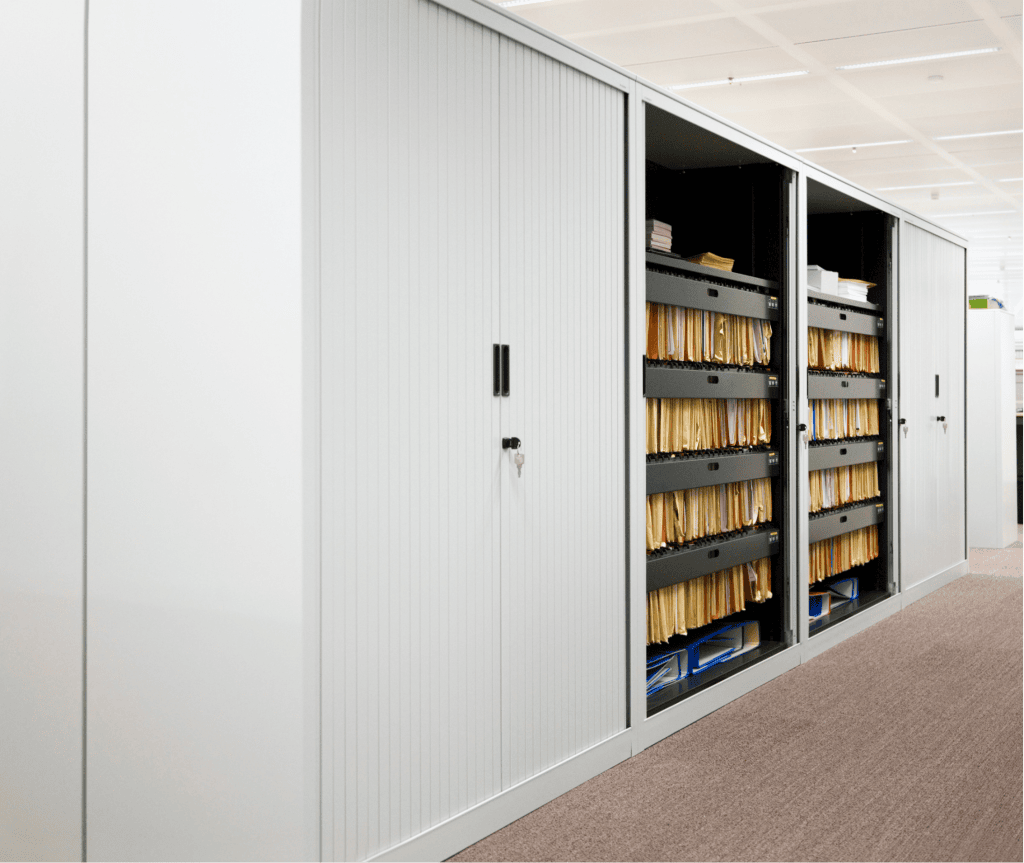
For document heavy teams, stick to proper A4 or F4 filing cabinets in standard Singapore heights. That’s 2, 3 or 4 drawers. If you have high volumes or want faster access, lateral 4 drawer cabinets give you wide drawers that make it easier to flip through files without pulling everything out. For many smalls to mid sized offices, a 4 drawer vertical cabinet remains the choice. It’s compact, familiar, and easy to fit along a wall.
If You Need General Office Supplies Storage
A practical setup is to separate files from office supplies. Use 1 to 2 dedicated filing cabinets for records, and one or more shelved cupboards for general supplies. This keeps file drawers from getting clogged with non file items and makes things easier to find. Offices in Singapore often source these from local suppliers offering standard full height and half height cupboards in swing, sliding or tambour doors.
If Security or Confidentiality Matters
The Personal Data Protection Act requires organisations to make reasonable security arrangements to protect personal data in their possession. That doesn’t mean you high-end security hardware, but it does mean thinking about who can access sensitive HR, payroll, or client records.
Look for cabinets with:
- Lockable drawers and sturdy steel construction
- Central locking, so multiple drawers can be secured together
- Clear labelling and access controls, for example only HR holding keys to certain cabinets
For highly sensitive documents, keep them in a dedicated, access controlled cabinet, separate from general supplies. Pair physical locks with simple processes like an access log and clear retention and disposal schedules.
Some organisations also choose fireproof metal cabinets for critical records. This isn’t required under the PDPA, but it can form part of a broader approach to protecting important documents.
When Should You Add More Metal Cabinets?
Even with careful planning, change needs to be made. Consider adding more storage units when you notice:
- Files spilling onto desks, shelves, or the floor because drawers are full
- Staff spending extra time searching for documents because drawers are overpacked
- New hires or new business lines increasing the volume of records you must keep
- Audits or compliance requirements forcing you to retain documents for longer
- Office reconfigurations that free up wall space or let you consolidate old furniture into a cleaner metal system
A good rule is to plan storage with a small growth buffer so you’re not constantly reacting at the last minute. If storage starts consuming too much of your lease area, look again at digitisation or offsite storage, both of which Singapore workplace design guidance actively encourages.
Conclusion
So, how many storage units does an office need in Singapore? Start with your total file and supply volume, match it to realistic cabinet capacities using local A4 and F4 sizes, then adjust for headcount, floor space, access frequency, and PDPA aligned security.
With a simple calculation and a small growth buffer, you can land on a number that keeps your office tidy, compliant, and efficient, without letting metal cabinets for office storage eat up your precious square footage. When you’re ready to shortlist products, comparing dimensions, door types, and locking options from established local suppliers will help you choose a system that fits both your space plan and your budget.
Frequently Asked Questions
How do I calculate how many storage units my office needs?
Base it on square footage of items to store, frequency of access, and whether it’s for documents, furniture, or equipment.
Does the number of employees affect how many units I need?
Yes. The more employees usually means more files, equipment, and personal items, so unit needs often scale with headcount.
What items should never go into a standard storage unit?
Avoid perishables, hazardous materials, and highly confidential documents unless the facility offers specific security and compliance measures.
How often should I reassess my office’s storage needs?
Reassess every 6 to 12 months, or after major changes like relocation, staff growth, or digitizing paper records. This is also a good time to check your office cabinet capacity and confirm it still matches how your team actually works.
