



Blog
Under Desk Storage Buyer’s Checklist for Open-Plan Offices

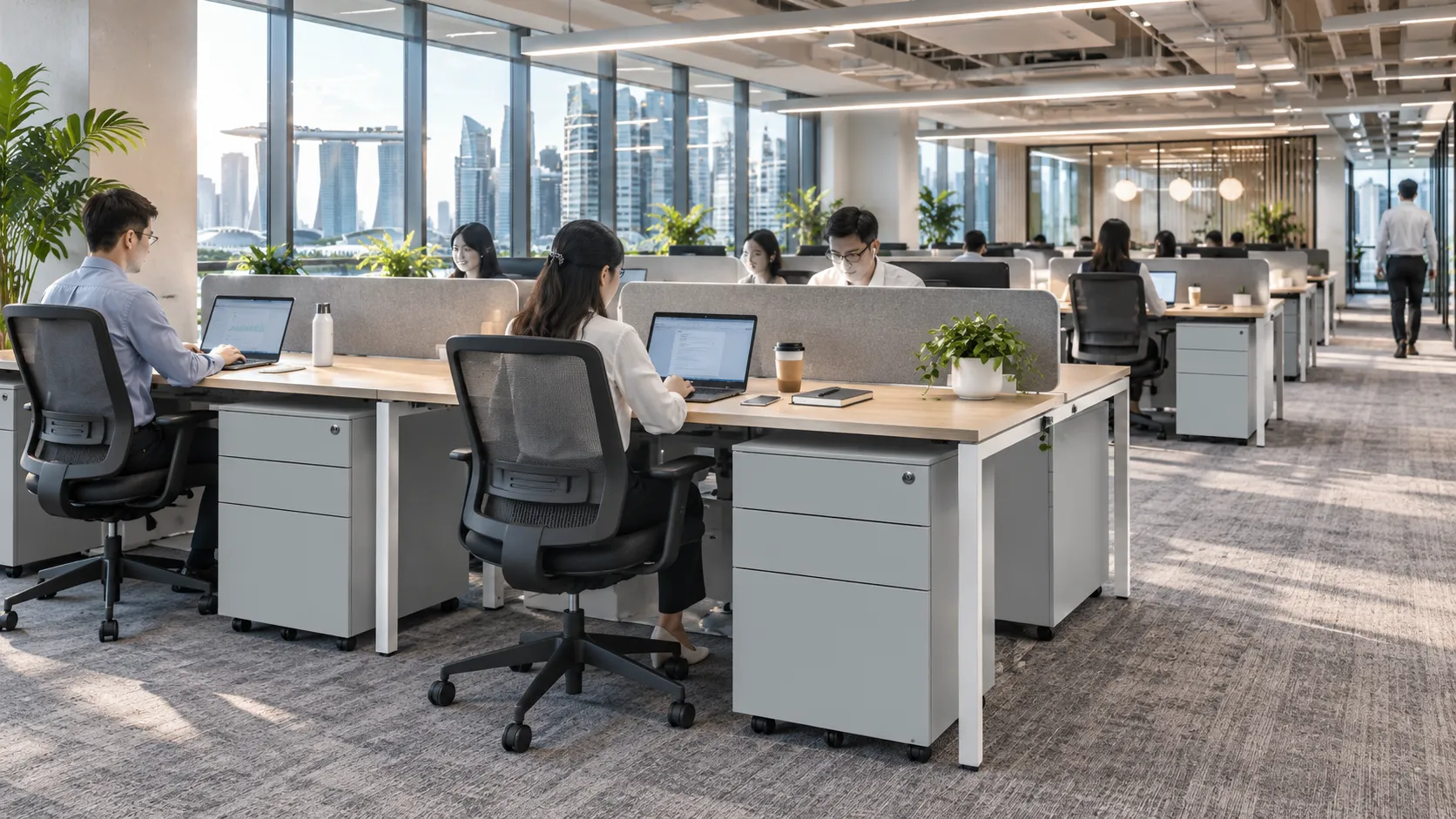
Table of Contents
On a busy in-office day, a hybrid team can fill up an open-plan office quickly. Laptops come out of backpacks after the morning MRT commute, working files are pulled from drawers, and someone realises their pedestal key is still at home.
For Singapore offices with assigned or semi-assigned workstations, under desk storage plays an important role in keeping everyday essentials organised. Unlike traditional cubicles with larger built-in cabinets, open-plan layouts often provide limited storage space for personal belongings, documents and work equipment.
This checklist is for procurement teams, facilities managers and office managers planning open-plan office storage. It covers how storage needs differ in shared workplaces, six key pedestal specifications to confirm before approving a purchase order, and how to match configurations to team size and working arrangements..
What Makes Open-Plan Office Storage Different
A traditional office with individual rooms keeps most storage out of sight. In an open-plan layout, storage is more visible, and three practical challenges stand out.
Shared Desks Raise the Stakes on Security
When desks are shared or rotated, employees need secure places for work documents and personal belongings. Payslips, signed contracts and client forms containing NRIC numbers may require controlled access, particularly when multiple employees use the same workstation.
Under Singapore’s PDPA, organisations must make reasonable security arrangements to protect personal data. The PDPC’s advisory guidelines on the Protection Obligation identify locked filing cabinets as one example of a physical security measure. Lockable pedestals can support document security, provided access and key management are properly controlled.
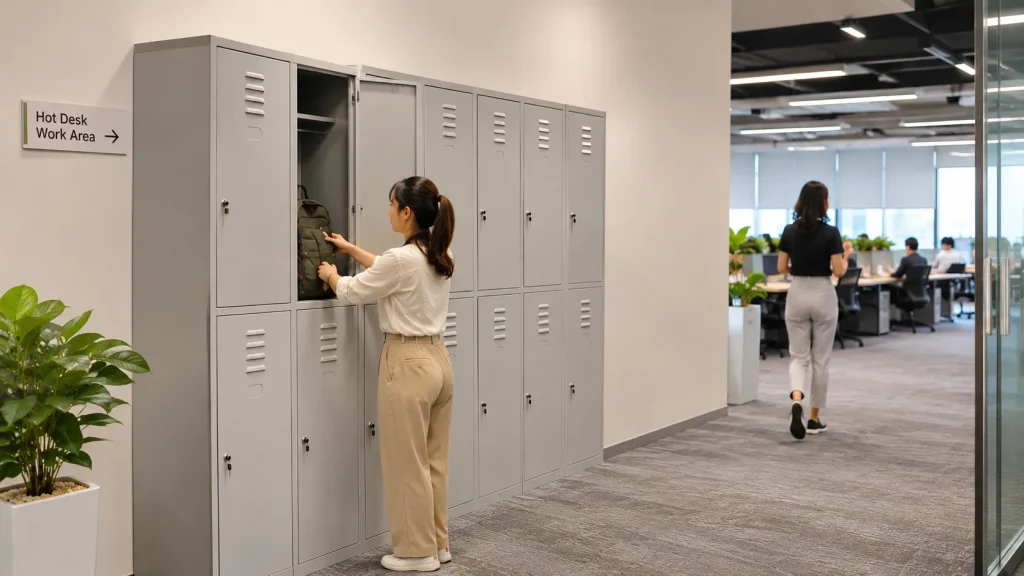
For bags, gym kits and helmets that do not need to remain at the desk, dedicated metal steel lockers offer a practical alternative, leaving pedestals available for everyday work essentials.
Tighter Aisles Leave Less Room for Bulky Units
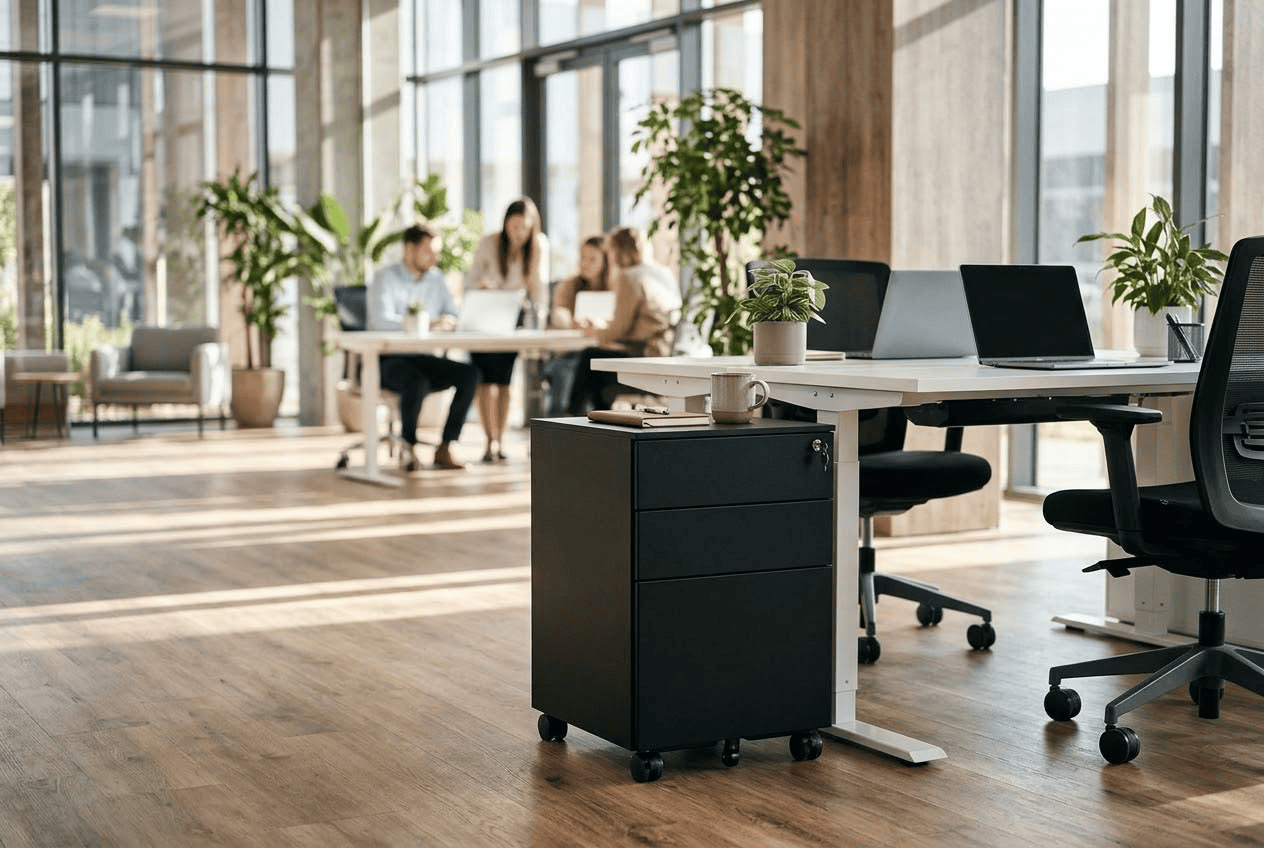
Many open-plan offices in Singapore use benching layouts to maximise available floor space. With desks positioned close together, there is less room for bulky storage units. A pedestal that extends beyond the desk edge or gets left in a walkway can become a trip hazard, especially when employees are moving between workstations.
The WSH Council’s office safety guidance recommends keeping walkways clear of obstructions such as boxes and cables to prevent slips and trips. The same principle applies to under-desk units. Choosing units that fit neatly beneath desks helps maintain clear walkways and a safer working environment..
Teams Move Faster Than Fit-Outs
Since the Tripartite Guidelines on Flexible Work Arrangement Requests took effect on 1 December 2024, Singapore employers have been required to properly consider formal requests for flexible work. For offices adopting hybrid schedules, this can mean different employees using the same workstations throughout the week.
An office originally fitted out with 40 fixed desks might eventually accommodate a team of 60 employees rotating their office days. Storage needs can change even when the physical layout stays the same. Under-desk unit offer greater flexibility than built-in drawers, allowing office managers to reposition or reassign storage units as teams grow, seating arrangements change or departments are reorganised.
6 Specifications to Confirm Before You Order
Product photos can look similar, but the differences that matter often appear in the specifications and during everyday use. Confirm these six points before you approve any under desk storage order.
1. Load Capacity per Drawer
A filing drawer packed with A4 or foolscap files can place considerable weight on its runners, especially when opened frequently. Ask the supplier for the rated load capacity of each drawer rather than relying on the overall unit capacity. Check the drawer runners too. Full-extension ball-bearing slides can make it easier to access files at the back, while runner quality and load ratings affect how well drawers perform over time. If your team handles heavy paper files, confirm that the selected pedestal can support them.
2. Lock Type and Key Management
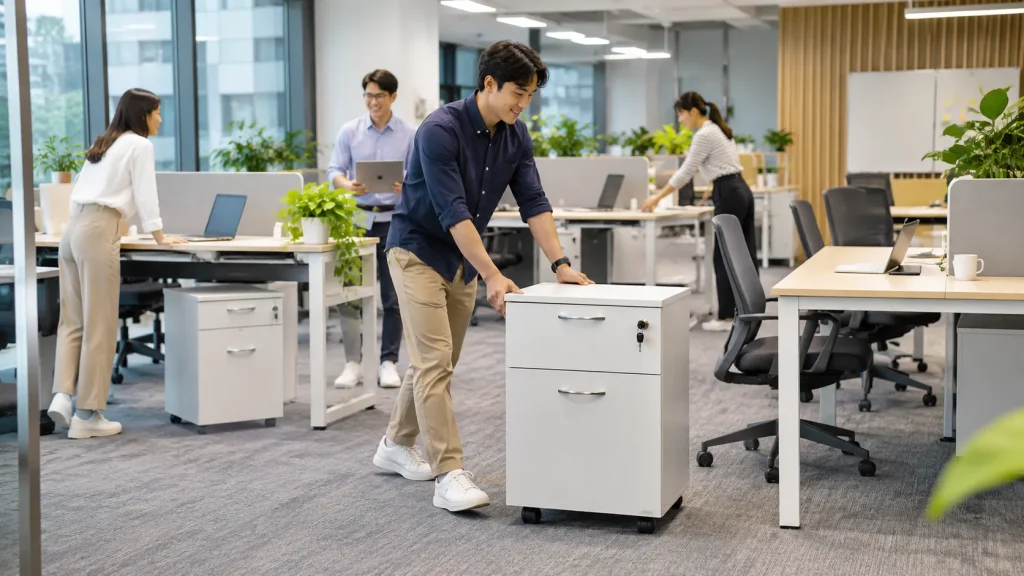
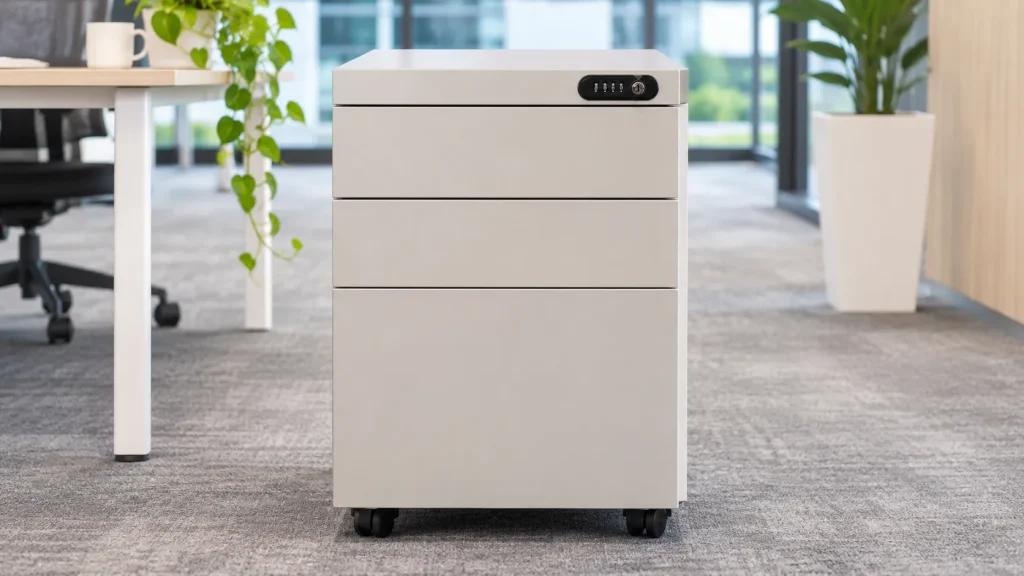
Central locking, which secures every drawer with one turn, is standard on most steel pedestals. The real decision is keys or combinations. Keys suit assigned desks but get lost, taken home on a Friday or swapped between desks. A 4-digit combination lock removes the need to manage physical keys, so a keyless mobile pedestal suits shared and hot desks well. If you choose keys, ask whether a master key is available for authorised access when staff leave.
3. Castors and Mobility
Mobility is the reason to choose a under-desk unit, but a unit that rolls too freely becomes a nuisance. Look for at least two lockable castors so the pedestal stays put when someone pulls a loaded drawer open. Ask about anti-tilt features as well, such as a fifth castor or an interlock that lets only one drawer open at a time. Finally, confirm the castors suit your floor finish, whether carpet tiles or vinyl.
4. Footprint and Desk Clearance
Measure under the desk, not the desk itself. Cable trays, modesty panels and leg frames all cut into the usable height and width. As a reference, the Avios 2-drawer small mobile pedestal stands 550 mm high, 400 mm wide and 485 mm deep, while its 3-drawer keyless model is 600 mm high and 570 mm deep. Both sizes are common, so check which one clears your desk system. Leave room for legs too. Singapore’s WSH Guidelines on Improving Ergonomics in the Workplace recommend sufficient knee clearance and legroom, and a pedestal jammed into the knee space works against that.
5. Drawer Configuration
The common open-plan formats are a 2-drawer unit (one stationery, one filing) and a 3-drawer unit (two shallow drawers plus one filing). Match the drawers to the work. Finance, HR and admin staff who still handle paper need a proper filing drawer that takes A4 and foolscap suspension files. Teams that work mostly on screen need shallow drawers for chargers, notebooks and personal items. A single under desk drawer fixed to the desktop rarely covers either need on its own.
6. Build Material and Safety Features
Steel pedestals with a powder-coated finish handle daily knocks from chairs and trolleys better than laminated board, and they wipe clean easily. Wooden finishes such as beech or oak suit client-facing areas where appearance matters more. Check for rounded edges, recessed handles that are less likely to catch on clothing, and anti-tilt features, where available, to improve stability.
Matching Configuration to Team Size and Desk Setup
Use this table as a starting point when you build the order list. It covers most open-plan office storage plans, from a 10-person studio in a shophouse to a full floor in a CBD tower.
| Team setup | Typical desk | Suggested pedestal | Lock |
| Assigned desks, paper-heavy roles (finance, HR, admin) | 140 to 160 cm workstation | 3-drawer with full filing drawer | Key, with master key |
| Hybrid team on hot desks | Shared benching row | 2- or 3-drawer, one per desk | 4-digit combination |
| Small team in a compact or serviced office | 120 cm desk | 2-drawer small pedestal | Key or combination |
| Project teams that regroup often | Loose desks or movable benching | Light 2-drawer on lockable castors | 4-digit combination |
| Reception and client-facing areas | Front desk or meeting area | Wooden-finish 3-drawer | Key |
Questions to Ask Suppliers Before Ordering Under Desk Storage
A reliable supplier should answer these clearly and in writing.
- What is the rated load for each drawer, and which runners do the filing drawers use?
- Can locks be keyed alike or keyed differently, and are master keys and spare keys available?
- Will the unit clear our desks once cable trays and frames are accounted for, and can you check on site?
- Are units delivered fully assembled, and do you take the packaging away?
- What is the lead time for 20, 50 or 100 units, and can you match the colour for a later top-up order?
- What warranty and after-sales support cover castors, locks and runners?
Conclusion
In an open-plan office, a pedestal is lockable storage unit, a filing system and a piece of moving furniture all at once. Specify it for all three roles. Confirm load, locks, castors, clearance, drawer layout and build quality, then match the configuration to how each team actually works. Getting under desk storage right at the order stage can help avoid unnecessary replacements after the next office move or lease renewal. To compare steel and wooden options with key or combination locks, browse Avios mobile pedestals built for Singapore workplaces.
FAQs
What size should under desk storage be for an office desk?
Common under-desk unit sizes run from about 550 to 600 mm high, 400 to 420 mm wide and 485 to 570 mm deep. Measure the clear height and depth under your desk, including any cable trays and frames, and pick a unit that fits with room left for legs.
Is an under desk drawer enough for an open-plan office?
Only for very light users. An under desk drawer holds a charger and a notebook, but it may lack secure storage or space for files. Teams handling documents may need lockable pedestals, while hot-desking offices can use personal lockers.
What type of lock works best for hot desking?
A 4-digit combination lock. It removes lost keys from the equation and avoids a key handover each time a desk changes hands. Confirm with your supplier how the code is reset between users.
How many drawers does each employee need?
Two drawers suit most screen-based roles, one for personal items and stationery and one for files. Three drawers suit roles that handle paper daily or keep samples at the desk. On hot desks, consider shared storage or lockers rather than assigning a pedestal to every workstation.
